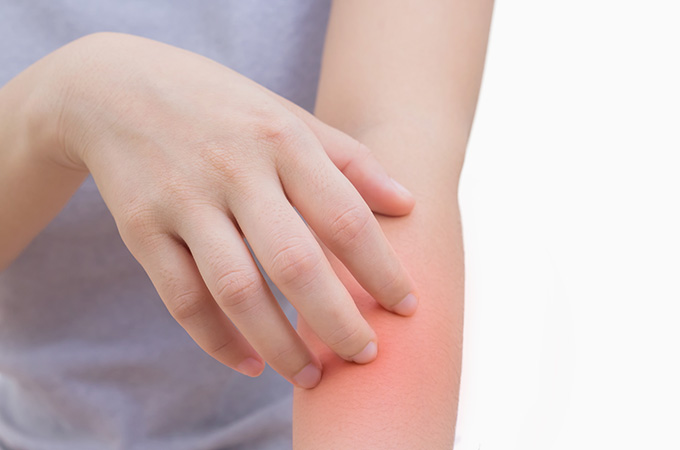
The mechanism of hives
Let's explain the mechanism by which hives occur. Hives involve blood, blood vessels, skin, and histamine. Histamine is a substance called an "active amine" made up of carbon, hydrogen, and nitrogen. This histamine is also present in the brain and is responsible for maintaining wakefulness and neurotransmission related to memory, and it also has the effect of suppressing appetite. Therefore, it is known that taking antihistamines can cause drowsiness, difficulty concentrating, and increased appetite.
Blood flows through the blood vessels that circulate throughout the body. This blood is composed of red blood cells that carry enzymes, white blood cells involved in immunity and allergies, and a liquid called plasma. When hives develop, attention is drawn to mast cells, a type of white blood cell. The name "mast cell" is unrelated to obesity in the sense of being overweight; it refers to the fact that these cells hold onto allergy-causing substances such as histamine and leukotrienes.
These mast cells, when stimulated by changes in body temperature or scratching, release substances they contain into the bloodstream, causing itching and swelling. A portion of the blood vessel in that area swells up like a balloon. As a result of this swelling, plasma leaks out through gaps in the vessel wall, pushing up the skin and causing it to bulge. Additionally, the increased blood flow due to the expansion causes the skin to turn red.