<Things you should know> The correct knowledge about "dark spots" (2) Explanation of the causes, symptoms, and prevention methods of "dark spots (hyperpigmentation)"
Among the various types of darkening, some areas, such as the underarms, elbows, and knees, can become discolored. While these are bothersome, many people are unsure how to treat them. How can this discoloration be prevented and addressed? This article will provide a detailed explanation of the causes, symptoms, and prevention methods for darkening caused by hyperpigmentation due to friction and other factors.
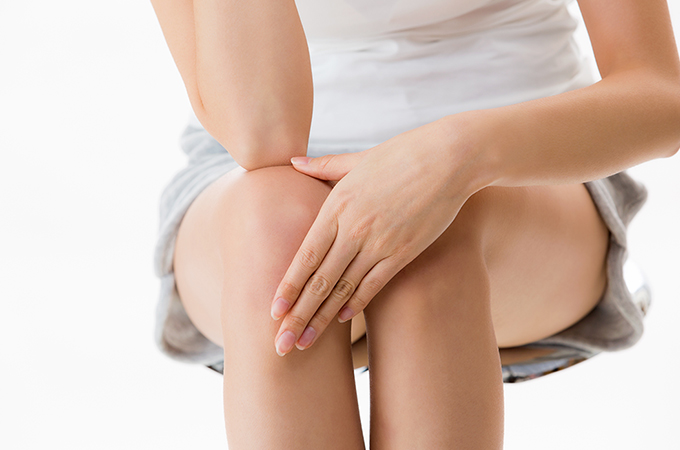
What is darkening (hyperpigmentation)?
Darkening of areas such as the armpits, elbows, and knees is caused by hyperpigmentation. First, let's explain hyperpigmentation.
Darkening of the skin due to hyperpigmentation occurs when melanin pigment is deposited in the skin. For example, hyperpigmentation can occur if the skin is rubbed too hard or if strong irritation from clothing comes into contact with the skin for a long period of time. Also, hyperpigmentation can occur and the skin may darken after inflammation caused by picking at acne too much.
"Pigmentation"
"Pigmentation" occurs when the production and excretion of melanin pigment become unbalanced, disrupting the melanin metabolic cycle and resulting in an excessive accumulation of melanin pigment in the skin.
Melanin pigment is continuously produced in the skin due to factors such as ultraviolet rays, aging, hormonal imbalances, dermatitis, and friction, but in healthy skin, it is excreted through cell turnover. However, when this mechanism malfunctions, the pigment remains deposited locally, resulting in dark spots.
Causes and mechanisms of dark spots (hyperpigmentation)
There are various causes of skin darkening due to melanin pigment deposition.
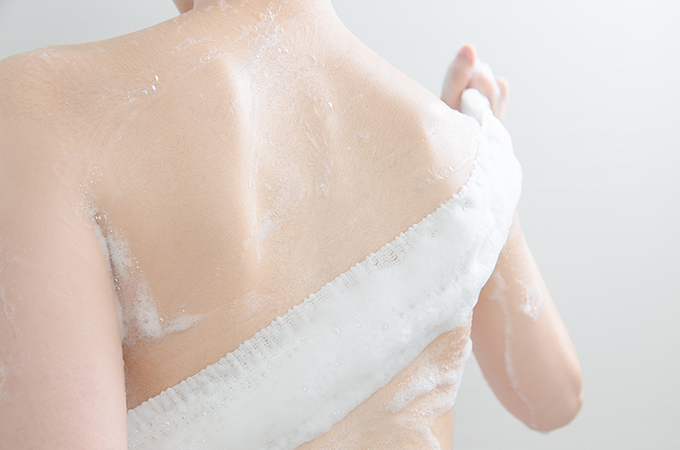
For example, it can be caused by friction-induced irritation such as using a nylon towel, massaging vigorously for the purpose of improving skin condition, or applying strong stimulation for a long period of time with synthetic fiber underwear or massage devices.
Furthermore, dermatitis caused by using unsuitable cosmetics, or inflammation resulting from excessive picking at acne, can lead to the overproduction of melanin pigment, resulting in hyperpigmentation.
Types of dark spots (hyperpigmentation)
Let's look at the specific types of dark spots.
-
Frictional melanosis
Melanosis is a condition in which melanin pigment and other substances are deposited in the skin tissue, causing it to turn dark brown. This pigmentation is caused by mechanical irritation. Slightly grayish-brown pigmentation is seen on the neck, cervix, and shoulders. It is mainly thought to be caused by excessive scrubbing with bathing tools such as nylon towels, brushes, and face brushes, as well as strong irritation from massage devices and synthetic fiber underwear.
-
Post-inflammatory hyperpigmentation
This condition involves hyperpigmentation in the skin as a result of inflammation, and there are several causes. For example, excessive picking of acne can cause inflammation and darkening of the skin, which is a type of post-inflammatory hyperpigmentation. In addition, dermatitis caused by unsuitable cosmetics, household products, or plants can also result in hyperpigmentation.

<By part>
Areas prone to darkening (hyperpigmentation)
Let's look at the areas where darkening due to hyperpigmentation is most likely to occur.
-
armpit
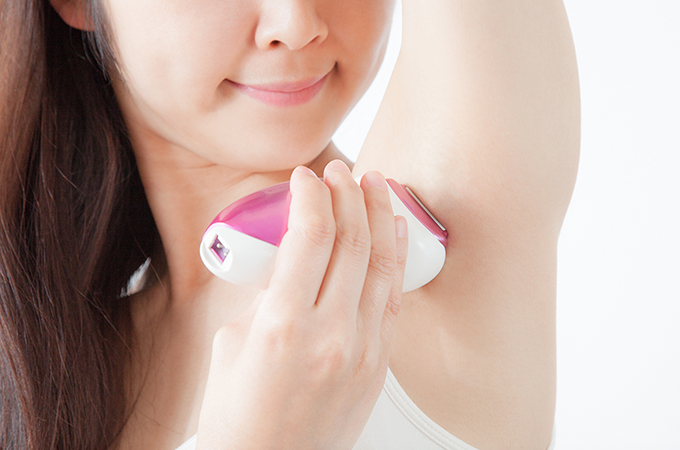
The underarms are a part of the body that can be irritated by friction from clothing and during hair removal. Irritation from self-treatment methods such as razors and tweezers can cause darkening of the underarm area.
-
Outer part of the arm, elbow, and knee
Scrubbing with nylon towels or brushes while bathing, or leaning on elbows or knees, can easily cause hyperpigmentation due to friction.
-
Bikini line/intimate area
Tightness and friction from underwear can cause hyperpigmentation.
-
Face and whole body
Post-inflammatory hyperpigmentation can occur on the face due to incompatible cosmetics, but it can also occur on the entire body.
<By part>
Methods to prevent dark spots (hyperpigmentation)
Here are some common ways to prevent dark spots caused by hyperpigmentation, categorized by the areas where they are most likely to occur.
-
armpit
Particular caution is needed when using hair removal methods that can cause strong irritation. To avoid damaging the skin, it's best to refrain from using razors and tweezers and instead use a gentle electric shaver. Also, shaving in the shower with soap can remove necessary dead skin cells, causing strong irritation. Apply cream or gel to dry skin and shave quickly in one pass. It's also important to moisturize thoroughly after hair removal.
-
Elbows, knees, and the whole body
Avoid resting your chin on your elbows, and don't kneel. Also, since friction can occur depending on the fabric of your clothing, choose soft materials such as cotton whenever possible. Furthermore, when bathing, avoid excessive skin friction caused by using nylon towels, sponges, brushes, etc.
-
Bikini line/intimate area
Avoid wearing tight-fitting underwear, as it can cause friction.
-
Face and whole body
If cosmetics or cleansers for the face or body don't suit your skin, inflammation can cause hyperpigmentation. Therefore, if you experience redness, itching, or other adverse reactions, discontinue use. It's also important not to pick at existing acne.
<By part>
Treatment for dark spots (hyperpigmentation)
If it has become discolored, the following are some common ways to deal with it.
-
armpit
The key to treating underarm darkening caused by friction is to normalize the skin's turnover process. The most important thing is moisturizing. After thoroughly moisturizing, if there is no skin irritation, you can use a whitening cream. There are also other options, such as light therapy to remove blemishes.
In terms of nutrition, it's important to consciously consume protein and vitamins, but diet alone is often not enough to address skin discoloration.
Also, be aware that prolonged strong irritation from self-hair removal or other methods can worsen skin discoloration.
-
Elbows, knees, bikini line, delicate areas, and the whole body
Discontinue the use of nylon towels, sponges, brushes, and other items that can cause friction and irritation to the skin. If you experience itching, consult a dermatologist. Common treatments include applying topical steroids or taking oral antihistamines.

We explain common problems associated with dark spots.
This article explains common concerns regarding dark spots caused by hyperpigmentation.
-
I'm concerned about the dark circles around my eyes. What can I do about it?
The skin around the eyes is thin and more sensitive to friction than other areas, making it prone to hyperpigmentation caused by friction. This can be caused by physical irritation during makeup application, rubbing too hard during cleansing, strong massages around the eyes, or poor blood circulation due to cold temperatures. Try to moisturize thoroughly before applying makeup, cleanse gently, avoid massaging around the eyes, and improve your lifestyle by exercising, stretching, and taking lukewarm baths instead of just showers to improve circulation.
-
I'm worried about dark underarms. Would a chemical peel at a dermatologist's office help?
Because the underarms are a part of the body that sweats a lot, peeling is not usually performed there. Even if peeling is done, subsequent skin care is more important, and since it is difficult to maintain the underarms in a proper condition, the main reason is that it is difficult to see results. Treatments for underarm darkening include light therapy, laser treatment, and the application of whitening creams.
Supervised by: Dr. Masako Hirata, Director of My Clinic Mejiro
Medical Doctor, Board Certified Dermatologist, Japan Medical Association Industrial Physician, International Certified Traditional Chinese Medicine Dietitian. Graduated from Nihon University School of Medicine and worked at Tokyo Medical University Hospital. After retirement, she returned to the front lines of clinical practice, treating over 500 patients daily. Subsequently, in 2003, she opened "My Clinic Mejiro," a specialized outpatient clinic for women, and assumed the position of Chairperson and Director.