The Great Hanshin-Awaji Earthquake
"Regrets" and "reflection"
This led to subsequent disaster prevention activities.
― It has been 30 years since the Great Hanshin-Awaji Earthquake. Chairman Yamada, and Professor Yoshiaki Kawada (hereinafter referred to as Professor Kawada), how were you spending your time when the earthquake struck? First, please tell us about your experience of "that moment" during the earthquake.
Yamada: I was sleeping soundly at home. I never dreamed that there would be such a big earthquake in Kobe, and I remember thinking, half-asleep, "Did a car or something crash into it?" or "Was there an explosion?" when the shaking started. Fortunately, my house was located high up in the mountains, so there wasn't much damage, but when I turned on the TV, there was a huge commotion, and I quickly realized that something serious had happened. Information about the damage came in one after another, and it became clear that roads were destroyed and fires had broken out everywhere... That's when I grasped the situation, and I was in a panic thinking, "This is terrible," and before I knew it, the day was over.
Because our home and its surroundings suffered relatively little damage, our company is located in Osaka and wasn't significantly affected, and the extent of the damage was relatively localized, I think I was simply shocked at the time and wasn't able to take much initiative. "Was there something I could have done?" "Could I have gotten involved more actively?" That lingering regret has remained in my heart ever since. And that regret eventually led to Rohto Pharmaceutical's subsequent disaster relief activities.
Professor Yoshiaki: I specialize in disaster prevention research, so as soon as the earthquake struck, I knew that a direct hit earthquake had occurred somewhere. Then I got a call from a TV station asking me to appear on the 10 o'clock news, so I headed there immediately. I went into the disaster area with the TV crew, and as soon as I got there, I realized how terrible the situation was. The more I walked and the more I saw, the more I understood how extensive the damage was, and I just couldn't help but cry. I had been researching urban disasters, but I realized that I hadn't been able to reduce the damage at all, and that disaster prevention research needed to be more practical. I reflected on this deeply. Although our positions and circumstances are different, like Chairman Yamada, I believe that the experience I had then changed my activities afterward.
I lost my parents in the Great East Japan Earthquake.
Supporting children
What is the "Michinoku Future Fund"?
—I see. You both had some profound experiences from your respective positions. So, based on those experiences, what specific activities have you undertaken? First, please tell us about Rohto Pharmaceutical's efforts to support disaster victims.
After the Yamada earthquake, electricity and gas were gradually restored, and the Hankyu trains started running again. For a while after that, we didn't think about the disaster and were engrossed in our daily business activities. Then the Great East Japan Earthquake struck, and I remembered the "lingering regrets" from that time. I thought, "This is terrible!" and "Now is the time to do something!" and immediately recruited employees to support the disaster-stricken areas. Thinking that too many people would make it difficult to move, we initially selected six employees and established a disaster recovery support office.
Those six people went to the affected area and, while participating in disaster relief volunteer activities, they witnessed firsthand that "a considerable number of high school students are giving up on going to university or vocational school." They said that there is a lot of support available up to high school age, but once they become adults, the support suddenly stops with the expectation that they should manage on their own. They heard stories of many young people whose parents have passed away and who, despite wanting to go to university or vocational school, have no choice but to get a job. I myself went to the affected area and volunteered, and after hearing such stories, I felt a strong desire to do something. Losing a parent is already a very painful and difficult experience, but to have to give up on your future on top of that... I wanted to do something to help them forge a future for themselves.
It was against this backdrop that the "Michinoku Future Fund" was established to provide financial assistance to children who lost one or both parents in the Great East Japan Earthquake, helping them to continue their education after high school graduation. The fund promises to continue its activities until the day the child who was in the womb at the time of the earthquake graduates, and provides full-scale grants of tuition and entrance fees for universities, junior colleges, and vocational schools, which do not need to be repaid.
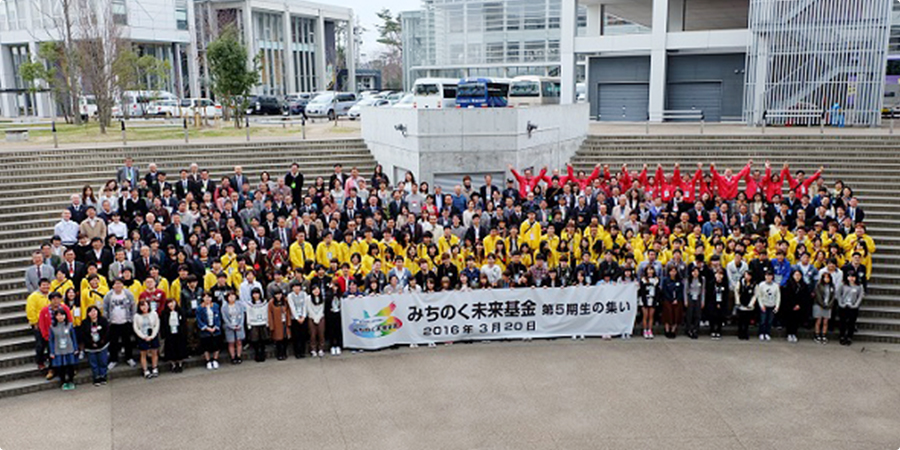
Yamada: We started the "Michinoku Future Fund" initiative together with Calbee and Kagome. As this support would last for 25 years, I felt that relying solely on our company wouldn't be enough to guarantee the stability of the fund for the children, so I reached out to business owners I knew well, and these two companies agreed to join us. When I approached them, both Calbee and Kagome readily said, "Let's do it," which made me very happy and encouraged. With three companies working together, we felt we could provide continuous support with three pillars, so we established the fund in October 2011. To date, we have been able to support over 1,100 children, and our support continues to this day.
Professor Kawada Jito (hereinafter, Professor Jito): This is truly a wonderful initiative. Children receive extensive support from the government until they turn 18, but as soon as they turn 18, that support stops... I think the value lies in the fact that this is being addressed by private companies, with multiple companies cooperating to provide long-term support. More than anything, I think the very existence of such companies gives children more hope than adults might realize.
International academic research on the earthquake and tsunami
Disaster prevention education is underway.
Parents and children affected by disaster
Activities to reduce
— How about you, Professor Yoshiaki? What kind of activities have you been involved in since the Great Hanshin-Awaji Earthquake?
Professor Yoshiaki established the Center for Research on Giant Disasters at the Disaster Prevention Research Institute of Kyoto University, where he is affiliated, the year before the Great Hanshin-Awaji Earthquake. He has been conducting research on earthquakes and activities related to reconstruction and recovery from this center. In 2002, he also co-founded the "Human and Disaster Prevention Future Center" with the Japanese government and Hyogo Prefecture to pass on the lessons of the Great Hanshin-Awaji Earthquake to future generations, and he serves as its director. In addition, he is involved in the "Memorial Conference in Kobe" (which continues as "Disaster Memorial KOBE" as of 2024), an initiative that involves many people, not only university faculty but also private companies and government agencies, to think about the earthquake and leave behind lessons and recommendations. Through these various initiatives and developments, it has become possible to disseminate information about the earthquake to the world, and "international academic research on earthquakes" has begun, involving research institutions and organizations not only in Japan but also overseas. With the desire to "conduct practical research to reduce damage," which he felt during the Great Hanshin-Awaji Earthquake, he continues to take various actions today.
— Mr. Jinjin, you are a researcher in disaster prevention education and also the son of Mr. Yoshiaki. What were your experiences during the Great Hanshin-Awaji Earthquake, and what kind of activities are you currently involved in?
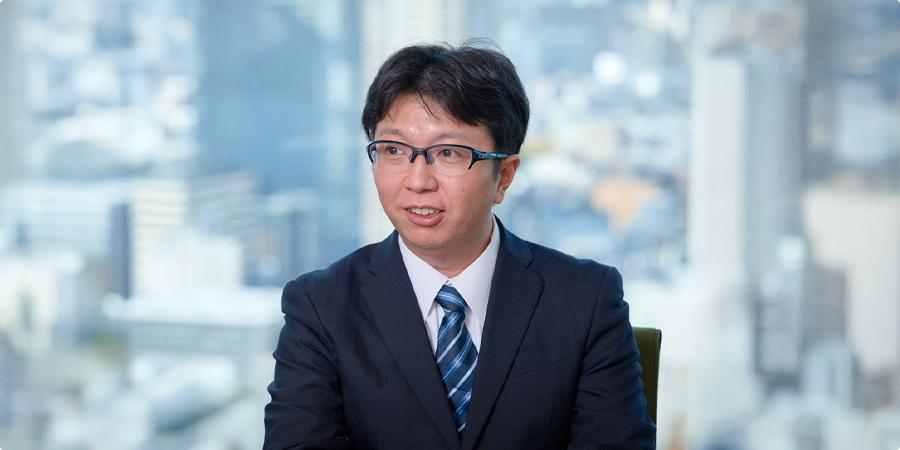
Mr. Jinjin: I was in first grade when the earthquake struck, so I don't have very clear memories of it. However, I had a vague understanding of my father's work, and I had the impression that he often went on investigations, not only domestically but also overseas. It wasn't until I became an adult that this vague impression became clearer. I would hear stories from people I met about their homes being destroyed in the earthquake or about losing family members at that time, and I came to realize anew the magnitude and depth of the damage, and that earthquakes can affect a person's entire life. Around that time, I was asked to write my graduation thesis at university, and since my father is a researcher in disaster prevention and my mother is an educator who runs a kindergarten, I decided to focus on disaster prevention education, which is important for the future of society and can protect the lives of children. Currently, I work as a lecturer at Kansai International University and a research fellow at the Disaster Prevention and Human Renovation Center. Like my father, I continue my research with the desire to reduce the damage caused by disasters as much as possible and to contribute to the future of society.
For future disaster prevention
What is essential is,
Developing the "ability to survive"
—Now, let's talk about the future of disaster prevention. Are there any challenges you feel you face, or anything you are consciously doing to address them?
Yamada: I'm not a disaster prevention expert, so I don't know all the details, but I think that having too many people concentrated in urban areas is one of the biggest risks. Kobe isn't particularly densely populated, but even so, during the earthquake, roads were cut off, making it impossible to go to the firefighting area, rescue operations were impossible, and trains stopped, making it impossible to move around. When I think about what would happen if this happened in a more populated city and over a wider area, I feel that even with the progress we've made in disaster prevention, it would still be very difficult. I think that what helps in such situations is physical strength and good health. As long as you're not injured, you can walk. Healthy people can walk away. We at Rohto Pharmaceutical are also working on regenerative medicine. I think the power of such medicine, drugs, and science is important, but I think that when something happens, physical and mental health is the most important thing. I think it's important to build up the "power to survive," including the ability to walk and immunity.
I agree with
Professor Keisho. Japan is incredibly small. A large number of people live in a small area, and the population is aging rapidly. Many elderly people die not from the direct damage caused by disasters, but from the changes in their lives afterward. In situations like these, I think the ability to walk on one's own and physical strength are absolutely essential for survival. Extending healthy life expectancy is also a very important aspect of disaster preparedness.
Yamada: And then there's the connection between people, that's important too, isn't it? I think the Japanese spirit of volunteerism and mutual support is truly wonderful. I believe that originally, the Japanese are a people with a very high capacity for cooperating with those around them and for restraining their actions. However, due to urbanization, the rise of nuclear families, and the influence of individualization, I feel that the presence of local communities has been fading recently. This is a great waste. I think it would be good if children could accumulate more and more experiences of working together to accomplish something, and volunteer experiences, through their education from a young age.
Professor Yoshiaki: That's right. Disaster preparedness isn't something special; it's part of everyday life. Of course, it's important to stock up on supplies and secure furniture so it doesn't fall over, but I think it's important to build up these everyday things as a normal part of life.
In my case, for example, I have set some small rules for myself, such as "always buying drinks and a bento box before boarding when traveling by Shinkansen or limited express train," "not leaving luggage in coin lockers with electronic locks," and "keeping antibacterial eye drops in my bag," and I try to practice these rules every day. Having drinks and a bento box gives me some peace of mind in case the Shinkansen is stopped, and I won't be in trouble if the locker where I left my luggage can't be opened due to a power outage. Also, antibacterial eye drops can be used not only as eye drops, but also for simple disinfection in case of injury. I believe that the best form of disaster preparedness is to make all of these things a habit, little by little, such as building physical strength every day, building relationships with people, education, practicing risk-avoiding behavior, and stockpiling.
Can be stored at room temperature for 5 years.
Rotary stockpiled food
Thoughts on "Heart Food Onigiri"
—Earlier, you mentioned that "disaster preparedness requires physical strength, health, and the ability to survive." Rohto Pharmaceutical's "Heart Food Onigiri," a recyclable emergency food product that will be launched in the spring of 2025, can also be considered a product that supports health and the ability to survive. Could you tell us about your thoughts on the product?
Yamada: Our company has supported people's healthy lives through pharmaceuticals, oral medications, and skincare products. Whether it's health or beauty, in terms of maintaining well-being, it all starts with what we eat. As the saying goes, "food and medicine are of the same origin," food makes up a person's body and health. In the world of food, preservation technology is also an important factor, and we encountered a new long-term preservation technology, which led us to decide to launch rice balls that can be stored at room temperature for extended periods. Many people have the image that "emergency food doesn't taste good," but Heart Food's rice balls can be eaten right out of the package and taste just like normal. And they can be eaten easily without cooking or using dishes. We planned and developed this product not only to serve as emergency food, but also with the aim of creating a cyclical food that can be eaten regularly in everyday life, consumed and replenished as needed, like a rolling stock system.
When
Professor Jinjin introduced this to me, I thought it would be great for, for example, a university student to keep at home when they start living alone. They can stock up on it for all four years of university, and it can be eaten quickly not only during disasters but also when they are feeling unwell. If you put it in your school bag, it can be used as both a snack and emergency food. It can be used as a kind of lucky charm. Also, it seems like it would be good to keep it in places like daycare centers. Daycare centers and families with children often keep hardtack and canned mackerel as emergency food supplies, but because children are not used to eating them, it seems that some children refused to eat them during past disasters such as the Great East Japan Earthquake. Rice balls are something everyone is used to eating, and they are safe for people with food allergies, so I thought they would be a good match for children.
Professor Yoshiaki, it would be even better if it were sometimes served in school lunches so that people could eat it regularly. I think it's a good product that I can also recommend as a disaster prevention expert.
—Finally, do you have any message for our readers?
Professor Yoshiaki, protecting your own life and the lives of your family is your own responsibility. Don't leave it to others; take it as your own responsibility and start taking action today. I hope you will not rely solely on information obtained from digital devices, but instead cultivate physical strength, good habits, and wisdom.
Yamada: Going forward, we at Rohto Pharmaceutical will continue to consider disaster prevention from various angles, including pharmaceuticals and food, with the aim of protecting people's healthy lives. We want to ensure that we have no regrets... As a company, we intend to steadily do what we can.