Our current journey trying to conceive as a couple
The world has changed due to the impact of the coronavirus.
Lifestyles, family, and attitudes towards health are also changing.
We spoke to a couple considering trying to conceive to hear about their realities and honest feelings.
Changes in how people perceive fertility treatment
What is fertility treatment?
"What everyone who wants children should do"
More and more people are seeing it this way.
- Married men and women trying to conceive
- Young men and women
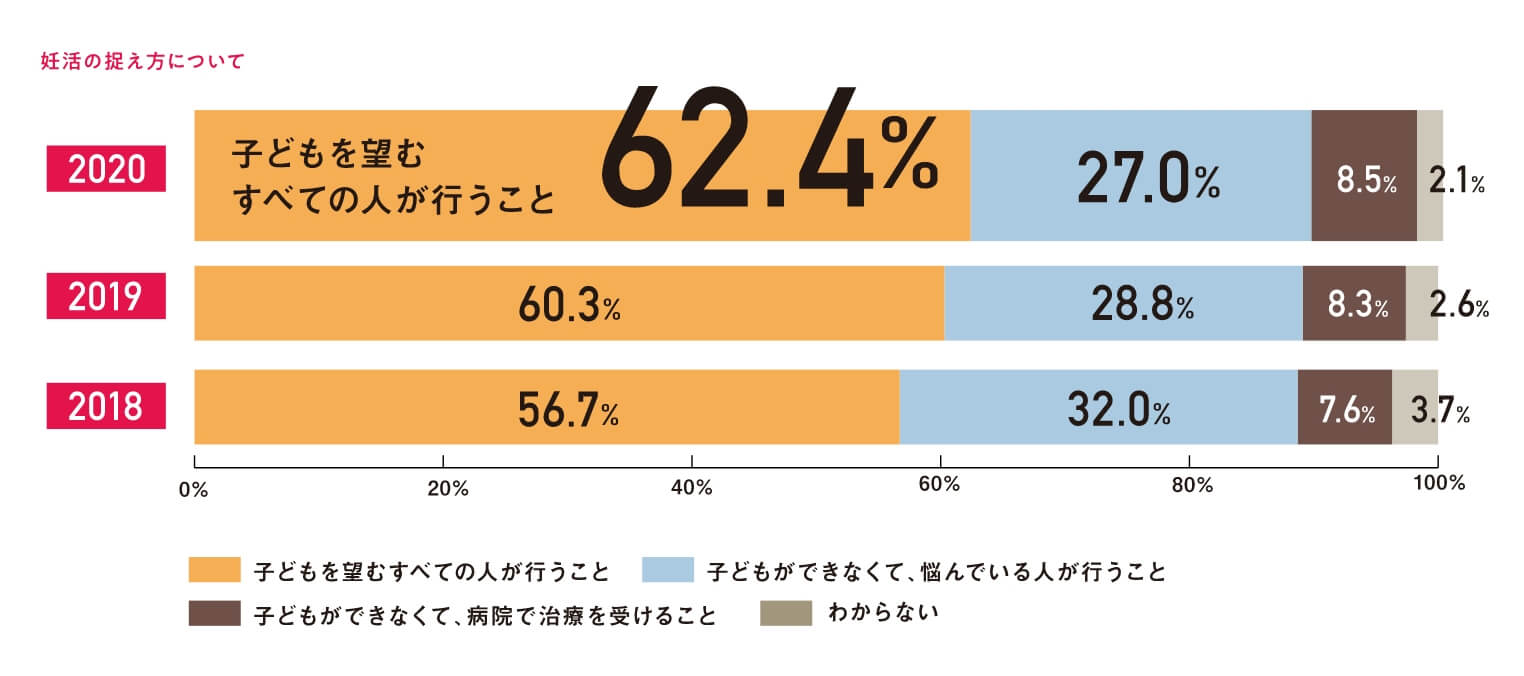
The image of fertility treatment has gradually shifted since 2018 from "something only people who are struggling do" or "receiving treatment at a hospital" to "something everyone who wants children does." This suggests a change in perception regarding fertility treatment.
We are able to conceive together.
The population has increased significantly.
- Married men and women trying to conceive
-
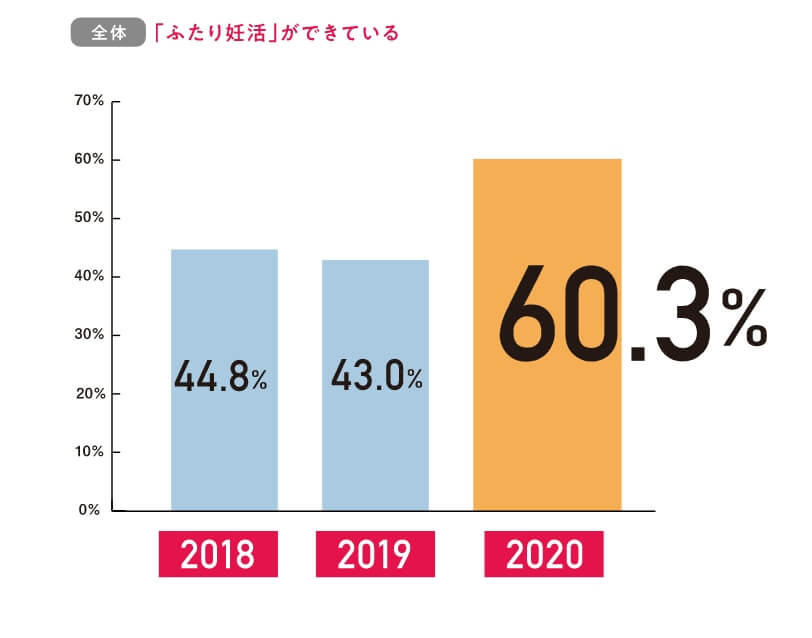
Among those who desire children, the number of people who say they are "trying to conceive together" is increasing, and it appears that this increase accelerated particularly in 2020.
-
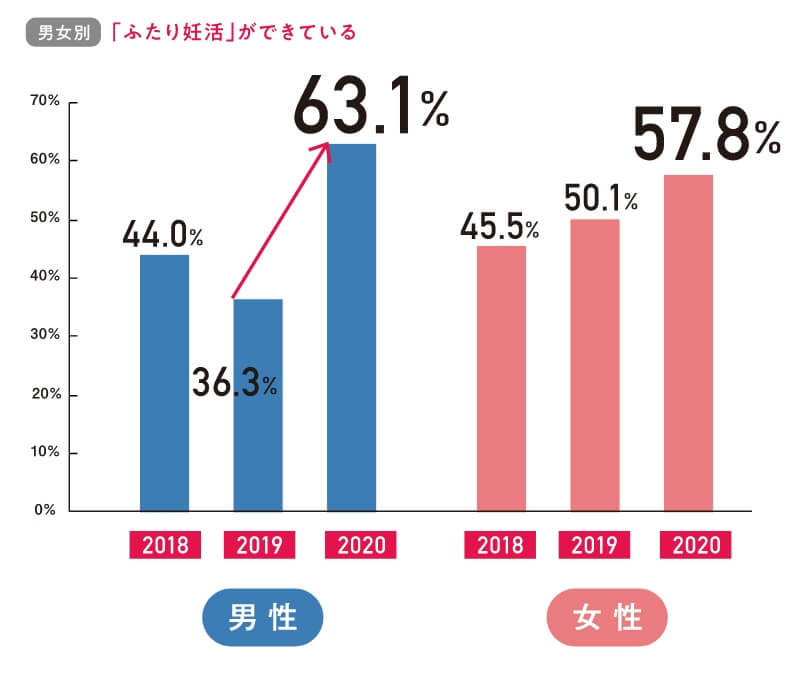
Looking at the data by gender, men's attitudes have changed particularly. It appears that men who were previously relatively passive about trying to conceive have become more conscious of the process.
Coronavirus
Various changes due to the impact
2020 saw significant environmental changes.
We took a closer look at the changes that have occurred in fertility treatments under these circumstances.
Coronavirus
Changes in fertility treatment practices due to the impact
Three out of four are continuing or resuming fertility treatment.
- Married men and women trying to conceive
Despite various restrictions, 55.3% continued trying to conceive, and 21.3% resumed after having stopped.
Regardless of whether they chose to continue, resume, or pause, 87.6% responded that "both spouses are satisfied with that choice." This suggests that couples are having thorough discussions about their options.
The degree of your and your partner's involvement in "trying to conceive"
For yourself or your partner
In contrast, health awareness is increasing.
- Married men and women trying to conceive
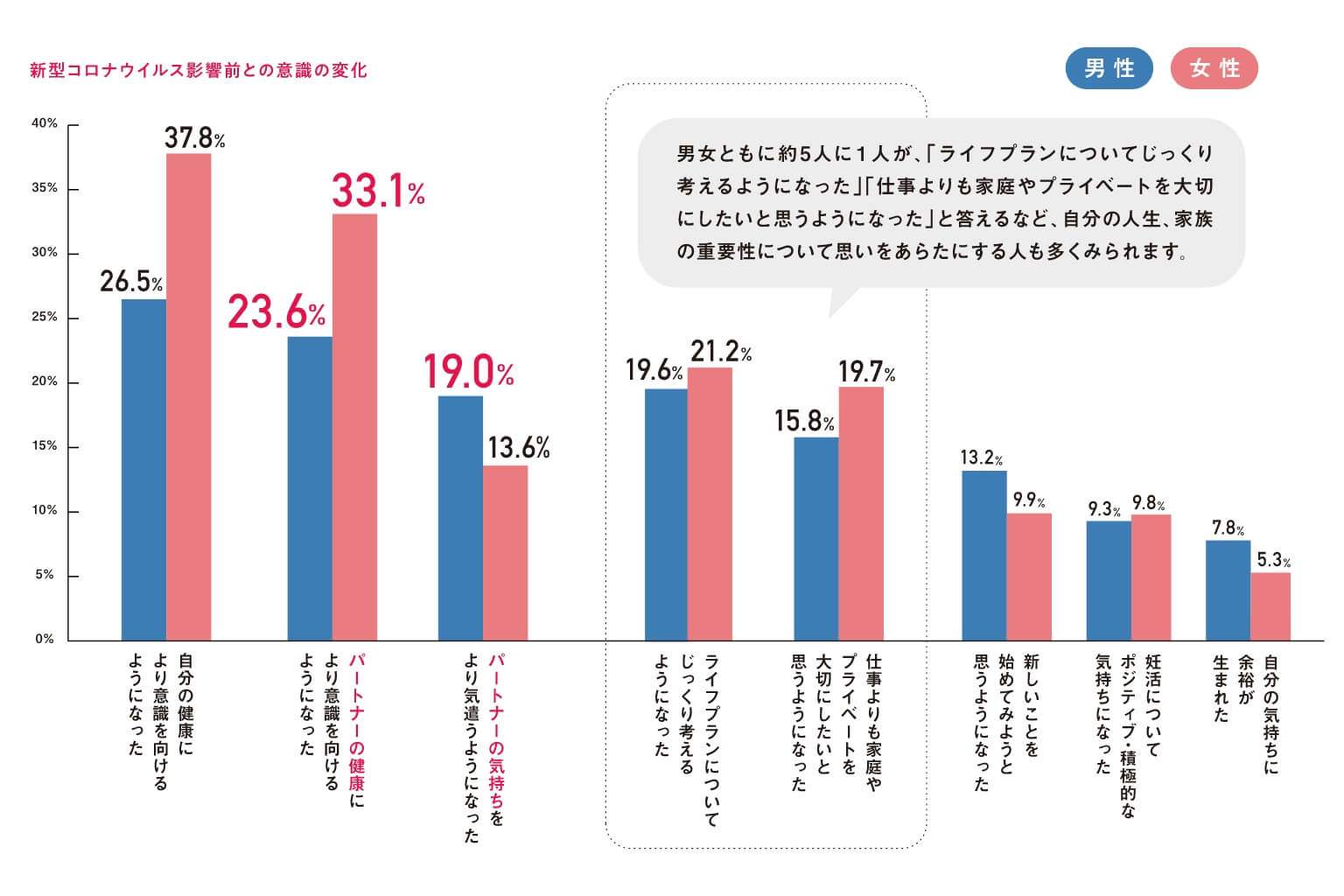
In addition to their own health, people are becoming more conscious of their partner's health, and men in particular are becoming more considerate of their partner's feelings.
Review your lifestyle and make self-care for conception a regular habit.
People have become more conscious of their health, paying attention to their diet and regular lifestyles, and women in particular have made changes such as measuring their basal body temperature and taking supplements a regular habit.
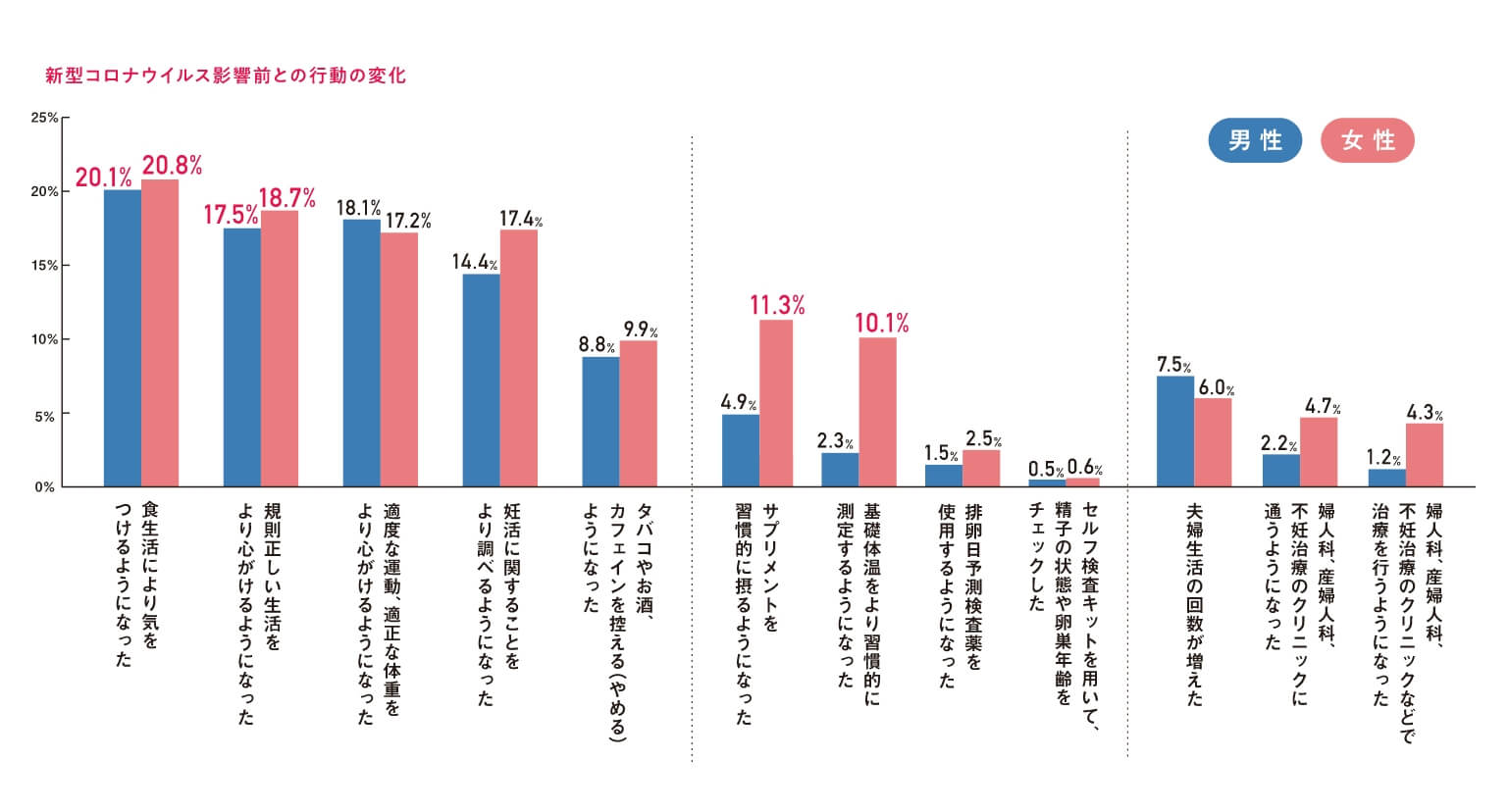
Due to the impact of the new coronavirus
Changes in sources of information about fertility treatment.
Including partners,
An environment that makes it easy to gather information and seek advice.
- Married men and women trying to conceive
Not only did their relationships with their partners deepen, but their use of social media and online services also increased. In particular, those who had temporarily stopped trying to conceive but have since resumed their efforts appear to have actively used these services, gathered information from a wide range of sources, and made the decision to resume their efforts.
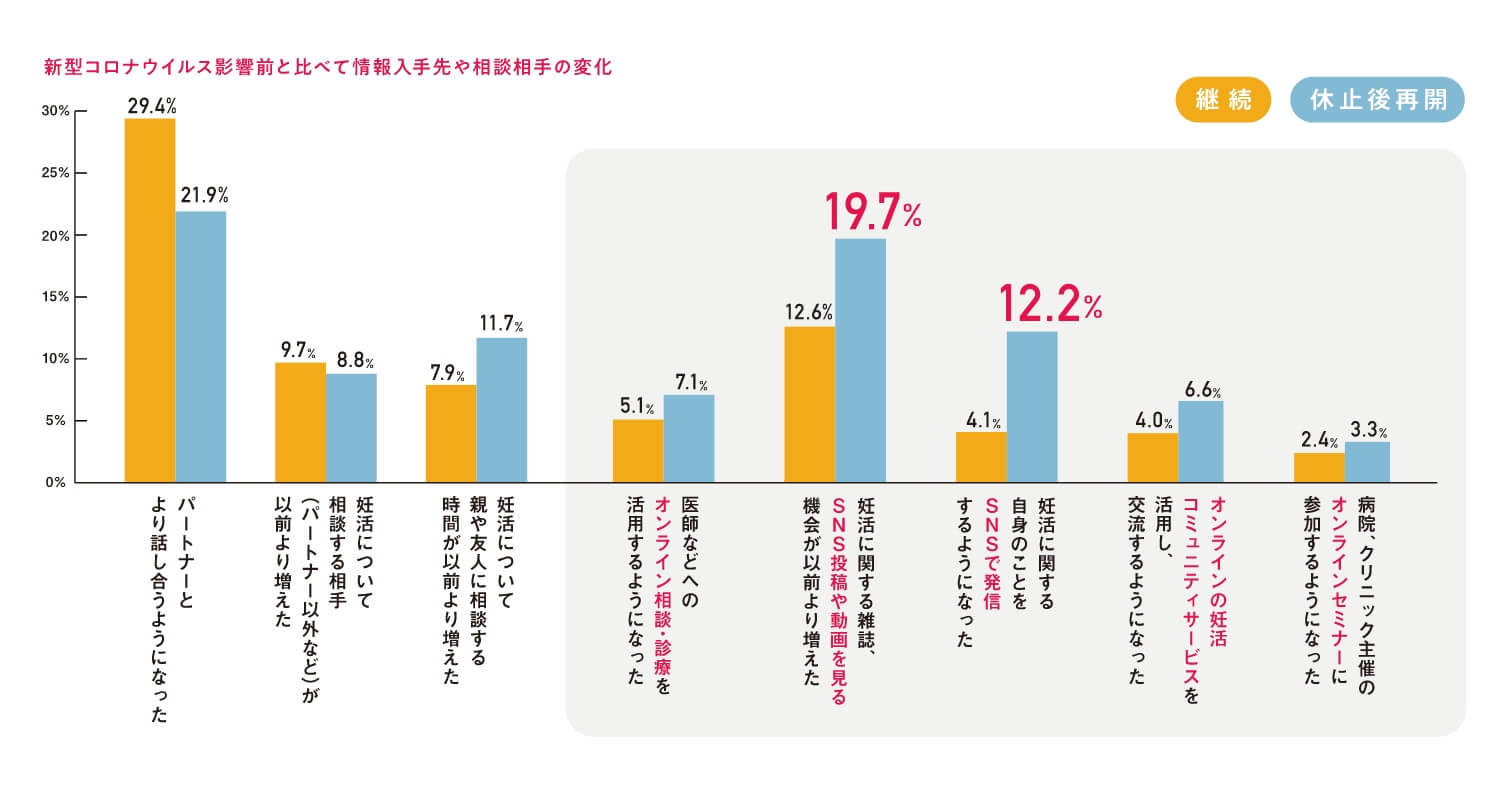
Many respondents cited the following reasons for the changes in various aspects, including awareness, behavior, and sources of information: "I spend more time at home" (23.7%), "Illness and death have become more immediate concerns" (10.5%), and "It has become more difficult to visit family and friends who live far away" (9.1%).
Furthermore, it appears that the increased flexibility in men's work styles has also influenced attitudes and behaviors towards fertility treatment.
The age at which a couple begins trying to conceive (the age at which they decide they want children)
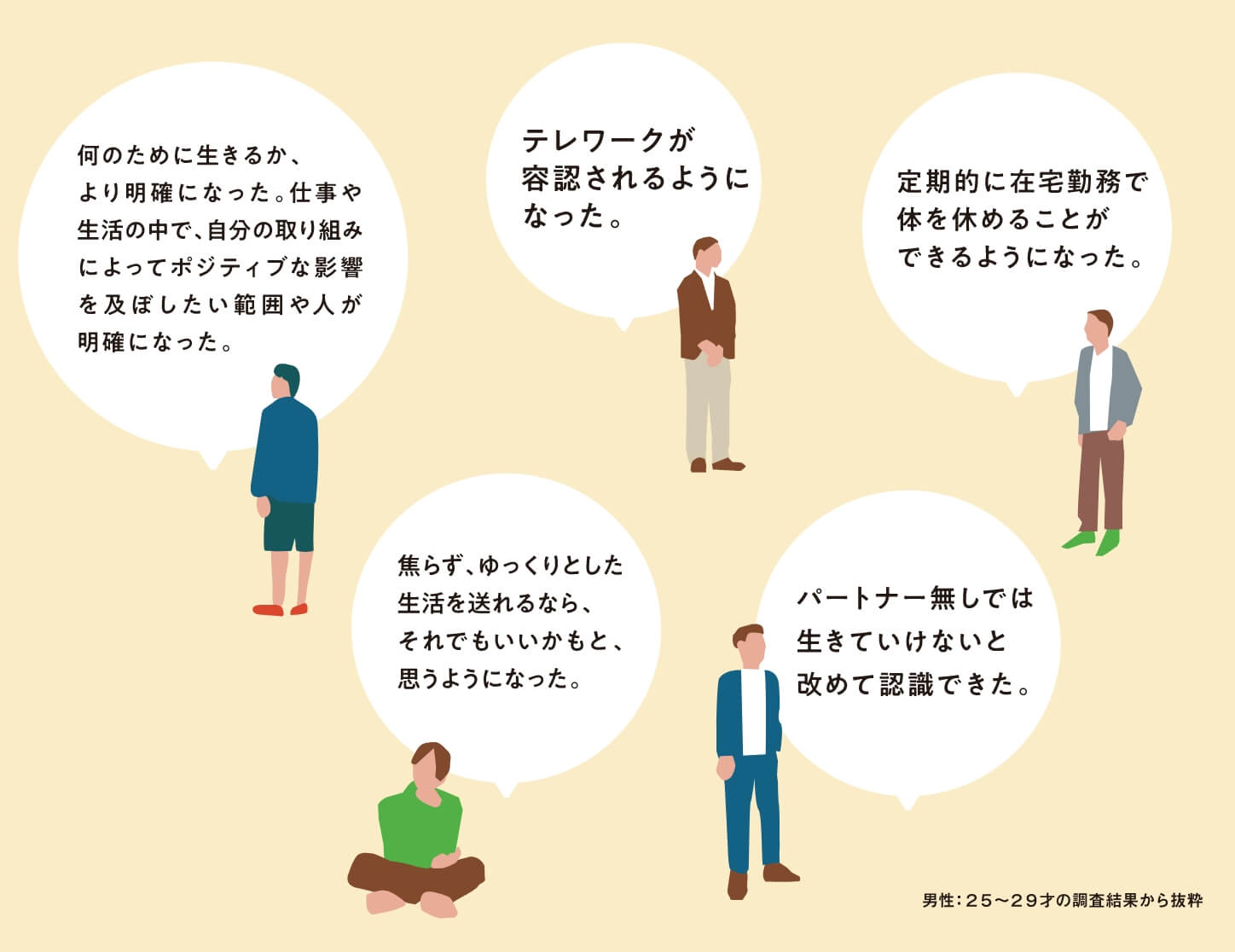
The coronavirus appears to have had various impacts on fertility treatments as well.
This provided an opportunity to reconsider health and life plans, and we observed changes in awareness and behavior regarding fertility treatment. In particular, we saw positive signs such as an increase in couples working together on fertility treatment and a shift in men's awareness of fertility treatment.
Furthermore, it was found that the options for fertility treatment are changing, with an increasing number of couples adopting new methods of fertility treatment, such as gathering information by effectively using social media and online services, and engaging in self-initiated fertility planning.
Rohto Pharmaceutical will continue to support couples who wish to have a baby, and will continue to encourage them to find their own way of trying to conceive, even amidst the rapidly changing world.