Updated on May 18, 2022

How to calculate ovulation day

  • ovulation day
  • Calculation method
  • Predictive tests

Clock illustrationReading time: 8 minutes

Dr. Masayuki Kinutani, Director of Kinutani Obstetrics and Gynecology Clinic

Dr. Masayuki Kinutani, Director of Kinutani Obstetrics and Gynecology Clinic

Supervision

Director, Kinutani Obstetrics and Gynecology Clinic (Medical Corporation)
Mr. Masayuki Kinutani

After graduating from Ehime University School of Medicine, she worked at the Department of Obstetrics and Gynecology at Hiroshima University School of Medicine and the Sanno Hospital Reproduction Center, before studying advanced reproductive technology in Canada, the United States, and the United Kingdom. In 2002, she became the director of Kinutani Obstetrics and Gynecology Clinic. She is a certified obstetrician and gynecologist by the Japan Society of Obstetrics and Gynecology and a certified reproductive medicine specialist by the Japan Society for Reproductive Medicine.

<Things you should know> The correct knowledge about "ovulation day"
2. How to calculate ovulation day

For those hoping to conceive, knowing your ovulation day is the first step in your fertile period. There are various ways to calculate ovulation, including simple methods based on your menstrual cycle, using a basal body temperature chart, or by observing your body's condition. This article will introduce specific methods for calculating ovulation to help you understand your most fertile time.

How to calculate ovulation day

How to calculate ovulation day

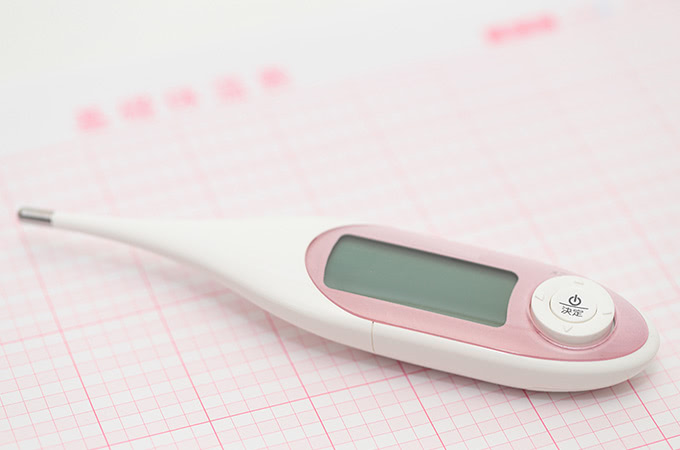
If you measure your basal body temperature every morning and chart it, you'll notice that there are two cycles: a low-temperature phase and a high-temperature phase. Typically, basal body temperature charts show a low-temperature phase lasting around 12-14 days before ovulation, followed by a high-temperature phase lasting 10 days or more. However, the current consensus is that basal body temperature doesn't contain as much information as previously thought. A drop in temperature doesn't necessarily mean ovulation, and temperature can rise before ovulation. Furthermore, the high-temperature phase can occur 2-3 days after ovulation, and ovulation can occur even without a clear biphasic pattern of low and high temperatures. Therefore, it's important to understand that a basal body temperature chart is only a rough guide, and there's no need to be overly concerned based solely on the chart.

There are various methods for calculating ovulation, and it's recommended to use two or three methods in combination to determine your ovulation day. If you want to know your ovulation day in advance but don't want to go to the hospital right away, you can use an ovulation prediction test kit that you can easily use at home. Alternatively, if you want to know your ovulation day accurately, it's best to have an ultrasound examination at the hospital.

Various methods for calculating ovulation day

Various methods for calculating ovulation day

Now, let's look at some specific calculation methods for determining ovulation day.

Ogino style

The Ogino method was devised in the early Showa period by obstetrician and gynecologist Dr. Kyusaku Ogino. Using the menstrual cycle as a guide, he discovered that ovulation occurs during the five days between 12 and 16 days before the expected date of menstruation, and used this method to predict the day of ovulation.
For those with irregular periods, menstruation and ovulation dates are not consistent, and even for those with regular periods, ovulation dates often change due to factors such as fever from a cold, fatigue, or stress, making accurate prediction difficult. Therefore, they should only be used as a guideline.

Basal body temperature chart

Basal body temperature is data that can predict what is happening inside a woman's body. By tracking it every day, you can quickly notice changes in your body and take appropriate care at each stage. This is a major advantage of tracking basal body temperature.
Traditionally, the "lowest temperature day" in the basal body temperature chart, where the temperature drops sharply at the end of the low-temperature phase, was considered the day of ovulation. However, with the widespread use of transvaginal ultrasound, it has become possible to predict the timing of ovulation within a few hours, and it has become clear that "lowest temperature day ≠ ovulation day." According to this, the day with the highest probability of ovulation is the day after the lowest temperature day.

Ovulation prediction test kit

Stress from work or other factors, as well as irregular menstrual cycles, can make it difficult to predict ovulation. In such cases, ovulation prediction test kits, available at pharmacies and other stores, can be a helpful tool to support basal body temperature charts. Ovulation is believed to occur approximately 30 to 40 hours after the start of menstruation, based on the hormonal mechanism in which luteinizing hormone secretion increases rapidly before ovulation. Ovulation prediction test kits predict the day of ovulation by detecting the amount of luteinizing hormone secreted in the urine.

Changes in vaginal discharge

Vaginal discharge is a mixture of secretions from the cervix (connecting to the uterus) and the vagina. While vaginal discharge is a natural physiological phenomenon that every adult woman experiences, it often carries negative connotations due to stained underwear and unpleasant odors. However, it plays an essential role in a woman's body.
While it varies from person to person and depends on changes in physical condition, the amount of vaginal discharge is generally roughly proportional to the secretion of estrogen. During ovulation, the amount of discharge is at its highest to facilitate sperm transport, and this period lasts for 2-3 days. The color is almost transparent, and it can be very sticky and jelly-like. If you take some mucus on your fingertip and spread your fingers, and the mucus stretches more than 7 cm, it is a sign that ovulation is approaching. The odor is not very strong. After ovulation, the amount of discharge gradually decreases and changes to a milky white color. It also becomes less sticky and thinner. In many cases, the odor becomes stronger.

Fukusan style

The Fukusan method is a method published online by a former midwife named "Fukusan" that helps determine the most fertile time to conceive based on changes in the uterus around the time of ovulation.
The procedure is as follows:

  1. Wash your hands thoroughly with soap and keep them clean. Also, trim your nails short.
  2. Spread your legs shoulder-width apart and insert your fingers along the vaginal wall.
  3. Once you reach the back of your vagina, look for a raised area. The tip of the raised area in the middle is the cervix.
  4. Check the degree of dilation and softness of the cervix.
  5. Take a sample of the discharge around the cervix and check its stretchiness and color.

Two to three days before ovulation, the cervix is slightly open and has descended lower. During ovulation, the cervix becomes as soft as an earlobe.
Furthermore, the Fukusan method also predicts ovulation based on cervical mucus. As ovulation approaches, the mucus becomes a stringy, jelly-like consistency, resembling egg whites mixed with a little yogurt. It is said that ovulation will occur 4-5 days after this state. When the stretchy mucus becomes sticky and no longer stretchy, it is a sign that ovulation has ended.

Internet and apps

Recently, there are apps and websites that easily predict menstruation and ovulation dates using a calendar. By recording your basal body temperature and menstruation dates, you can learn about your body's rhythm, such as the expected date of your next period and ovulation. In addition to basal body temperature graphs and weight graphs, some also include useful information such as health information tailored to the menstrual cycle, providing comprehensive support for women's health concerns. However, ovulation date calculations and predictions are not always accurate, so use them only as a guideline.

About ovulation prediction test kits

About ovulation prediction test kits

There are various ways to determine your ovulation day, but using an ovulation prediction test kit is a highly accurate way to predict it.

What are ovulation prediction test kits?

Ovulation prediction test kits can detect signs of ovulation from components in urine. A positive result on an ovulation prediction test kit means that "more hormones that stimulate ovulation are being produced than usual," and it is said that ovulation occurs within approximately 40 hours of a positive result.
Ovulation prediction test kits were once only for medical use, but now they are available as over-the-counter (OTC) medications that can be purchased by the general public at their own discretion, and can be bought at some drugstores and online.

How ovulation prediction test kits work and how to use them

Ovulation prediction test kits predict the day of ovulation by detecting the amount of luteinizing hormone (LH) secreted in the urine. A phenomenon called the "LH surge" occurs before ovulation, in which LH secretion increases rapidly, and ovulation is said to occur approximately 30 to 40 hours after the start of the surge.
To use the test, start testing 1-2 times a day from 17 days before your expected menstrual period based on changes in your basal body temperature. However, since the duration and peak value of the LH surge vary from person to person, you may test 3 times a day if you feel that 1-2 times is insufficient. Also, test at the same time every day from the start of testing.
For those with irregular menstrual cycles, it can be difficult to predict when the next period will begin. Additionally, consuming large amounts of fluids before using an ovulation prediction test can dilute the LH concentration in the urine. If you're consistently getting faint positive results with an ovulation prediction test, you should first consider whether the timing of the test is correct. Furthermore, some people have naturally low baseline LH levels, so if the timing is correct but you're only getting faint positive results, it's recommended to get tested at a medical institution.

How ovulation prediction test kits work and how to use them

We strive to publish accurate information, but please let us know if you find any errors.

Regarding medical information
Please submit your comments here.

Share
  • Facebook
  • line
  • Twitter

Return to the top of the column