
I've heard that male factors can also cause infertility. What percentage of cases are due to male factors?
Professor Takashi Utsunomiya
According to a 2017 World Health Organization (WHO) survey, male factors accounted for 24% of infertility cases, and both male and female factors accounted for 24%, meaning that male factors were involved in about half of the cases. However, I believe the actual percentage is much higher.
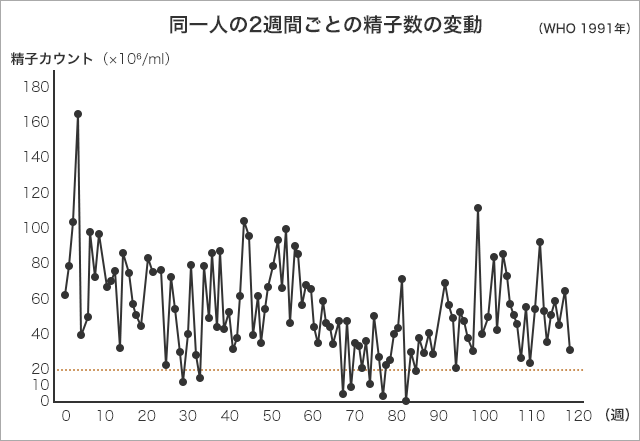
When we measure the sperm concentration of men who actually come in for examinations, the results vary each time. Our data shows that 43% of men have sperm concentrations below the WHO standard, indicating that nearly half of the causes are due to the men themselves.
Does sperm concentration vary from day to day, even in the same person?
Professor Takashi Utsunomiya
While there are individual differences, sperm concentration can drop drastically during stressful periods such as long business trips or busy holiday seasons. Therefore, a single semen analysis cannot determine whether a person is prone to infertility.
At St. Luke's Obstetrics and Gynecology Clinic, we perform semen analysis three times and use the best value as the representative value. We believe that sperm are very sensitive to stress.
Does aging have any effect on sperm quality?
Professor Takashi Utsunomiya
While sperm count may not change significantly, it has been observed that the number of genetic defects in fertilized eggs tends to increase with age. It is believed that sperm quality declines with age, leading to an increase in genetic mutations and a higher risk of conditions such as autism.