A stye, or hordeolum, is an eye condition that has various names in different regions.
We've compiled approximately 10,000 survey responses from Rohto Club members nationwide and created a map showing the national distribution of the names used.
It really does have a huge variety of names all over the country!
You might discover the origins of the name you use!
I looked up the different names for it across the country!
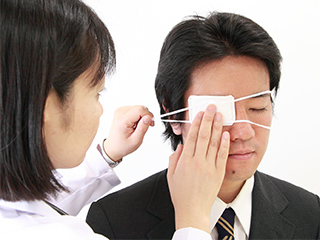
A stye is caused by a bacterial infection, such as Staphylococcus aureus, on the edge or inside of the eyelid, and is also medically known as a "hordeolum."
If left untreated, the bacteria can multiply repeatedly, potentially leading to painful purulent inflammation. This is one eye condition that requires particular attention during swimming pool and beach seasons.
The term "monomorai" is mainly used in eastern Japan, but it is known that various other dialects are used in different regions, such as "mebachiko," "meibo," and "ohimesan." (Some people may not be very familiar with the term "monomorai" itself.)
Therefore, we conducted a survey on "styes" among Rohto Club members, and received approximately 10,000 responses from all over the country!
Thank you so much to everyone across the country who cooperated!
Stye name distribution Japanese map completed! !
The results of the survey you all submitted were very interesting, as they clearly showed the regional differences in the names used for "stye" (hordeolum).
Therefore, in analyzing these survey results, we received detailed explanations about the etymology and history of dissemination from Professor Yu Jian of the Faculty of Education at Mie University, an expert in dialect research, and thus, the "Map of Name Distribution in Japan" has been completed!
How widely is the name you're using currently used throughout the country? The results will now be revealed!
Commentary by Jian Yu, Associate Professor, Faculty of Education, Mie University (at the time of the survey)
[Citations/References]
- Yoneichi Ono
- "Migration and Language Transformation," Keisui-sha (2001)
- Compiled by the National Institute for Japanese Language and Linguistics
- "Linguistic Atlas of Japan, Volume 3," Ministry of Finance Printing Bureau (1968)
- Supervised by Ryoichi Sato
- "Understanding Local Dialects: A Dialect Atlas," Shogakukan (2002)
- Horii Reiichi
- "Methods of Etymology and Comparison," *Etymology*, Meiji Shoin (1986).
- Shouta Yamanaka
- "Dictionary of Dialectal and Slang Etymology," Kōkura Shobō (1987)