During pregnancy, hormonal changes often lead to skin problems. For example, stretch marks, itching, and hair loss are common. Many women are surprised and confused by these unexpected skin issues. Therefore, with the supervision of a dermatologist, we will discuss the causes of these skin problems, as well as possible prevention and treatment options.
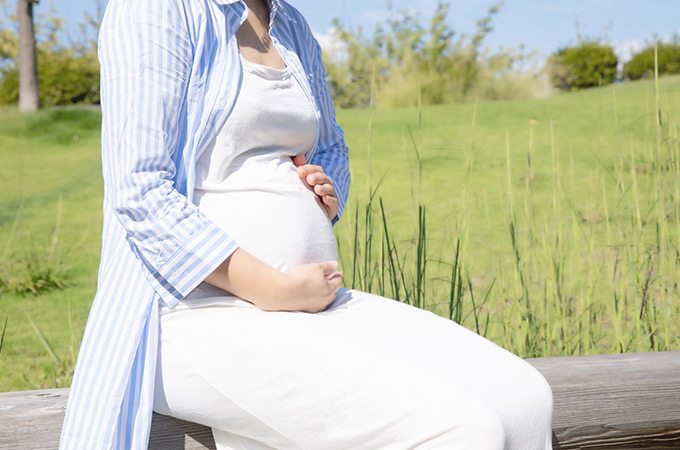
About stretch marks (skin tears)
Stretch marks (skin tears) refer to the appearance of crack-like lines, several millimeters wide and several centimeters long, on the skin, mainly in the lower abdomen, breasts, and buttocks, starting around the sixth month of pregnancy. Initially, they are pale pink, but later turn grayish-white, and fine wrinkles appear on the surface.
The formal name for stretch marks is "linear cutaneous atrophy" or "striata," and they are sometimes colloquially called "stretch marks" overseas.
Causes and mechanisms of stretch marks (skin tears)
There are two main causes of stretch marks. First, as the abdomen, buttocks, and breasts enlarge during pregnancy, tears occur in the skin. The skin is composed of three layers: the epidermis, dermis, and subcutaneous tissue. The epidermis is easily stretched, while the dermis and subcutaneous tissue are not. As the abdomen and breasts grow rapidly during the second trimester of pregnancy, the dermis cannot keep up with the stretching, causing tears to occur inside the skin.
The second reason is related to hormone secretion. During pregnancy, the secretion of hormones that cause skin to lose elasticity increases, leading to a decrease in skin elasticity and a weakening of the skin itself. As a result, skin tissue tears become more likely during pregnancy.
People who are prone to stretch marks
The factors that make some people prone to stretch marks are not yet clear. The only known factor is that people with Ehlers-Danlos syndrome, a genetic disorder characterized by a congenital defect in collagen that weakens connective tissue, tend to be less prone to stretch marks. This has led to speculation that there may be some genetic factor at play. In addition, it is said that people with a lot of subcutaneous fat are more likely to develop stretch marks, but this has not been definitively proven. However, since stretch marks occur due to the rapid stretching of the skin, it can be said that they are more likely to occur in multiple pregnancies than in single pregnancies.
Basic prevention and treatment methods
Unfortunately, there are no medically proven methods to prevent stretch marks during pregnancy. Therefore, oil massages and moisturizers cannot be said to be clearly effective at present. In other countries, vitamin A derivatives that address disruption of collagen fibers are sometimes used, but their use during pregnancy is prohibited in Japan.
Using a moisturizer containing retinol is recommended as a measure against dryness during pregnancy.
For treating existing stretch marks, radiofrequency (RF) therapy, used in cosmetic dermatology and plastic surgery clinics, can be effective. By tightening collagen fibers, it is expected to revitalize the skin. High-intensity focused ultrasound (HIFU) therapy, which is effective in improving sagging, is also considered effective. If there is redness, treating it with a pigment laser is another option.

About postpartum hair loss
Many women experience sudden hair loss after childbirth. This phenomenon is actually related to the "hair cycle." The hair cycle refers to the cycle from the "anagen phase," in which hair matrix cells actively proliferate, to the "catagen phase," in which cell division stops, and to the "telogen phase," in which hair falls out and new hair follicles are formed. During pregnancy, the increase in female hormones causes more hair than usual to enter the anagen phase. Therefore, hair temporarily increases during pregnancy. This also applies to body hair, and you may notice changes such as hair becoming thicker or more abundant.
After childbirth, hormonal changes cause all the hairs that were in the growth phase to enter the resting phase. During this time, hair loss increases, and the hair may temporarily appear thinner. However, once hormone levels return to normal, the hair cycle will naturally resume, so there is no need to worry.

About itchy skin during pregnancy
During pregnancy, you are more susceptible to various skin conditions that cause itching. Since severe itching can sometimes prevent you from sleeping, don't hesitate to see a dermatologist.

-
erythema multiforme
This skin condition is characterized by the formation of numerous slightly raised, watery erythematous patches that appear symmetrically, primarily on the limbs. It is also known as "erythema multiforme." The patches may merge together in a map-like pattern, and blisters may form in cases of severe inflammation.
While infections and allergic reactions to medications are the main causes, it can also occur during pregnancy. The symptoms are usually temporary and typically last only a few weeks.
-
Pruritic urticarial papules and plaques of pregnancy (gestational pruritus)
Prurigo is an itchy eczema that is often difficult to treat. When it occurs during pregnancy, it is called "prurigo of pregnancy (PUPGP)."
It is most likely to appear on the limbs in early pregnancy (3-4 months) and improves after childbirth. It often occurs in subsequent pregnancies and tends to recur with each pregnancy. In addition, pruritic rashes accompanied by severe itching may appear in late pregnancy, mainly on the abdomen and limbs. In this case, it is more common in first pregnancies, especially in twin pregnancies, and will usually subside within a few days after delivery.
-
Pregnancy-induced intrahepatic cholestasis
This is a liver disorder specific to pregnancy, in which sudden, intense itching occurs on the palms of the hands and soles of the feet, and then spreads throughout the body.
Basic countermeasures
The most common treatment for itching during pregnancy is the use of topical steroids. Many people may feel anxious about using topical steroids during pregnancy, but the medication prescribed by a specialist is carefully formulated to be the appropriate dosage for your symptoms.
If you resist the urge to scratch because you can't stand the itching, instead of relying on medication, your symptoms will worsen, such as developing oozing eczema. Therefore, it's best to first consult a dermatologist and prioritize suppressing the itching, such as by using topical steroids, and receive appropriate treatment.