Causes (mechanisms) of cracked and chapped skin
Chapped and cracked skin is common in winter because it is affected by lower temperatures and dry air. When temperatures drop, the amount of sweat and sebum secreted decreases, making the skin more prone to dryness. On top of that, the dry air irritates the skin, further depleting its moisture.
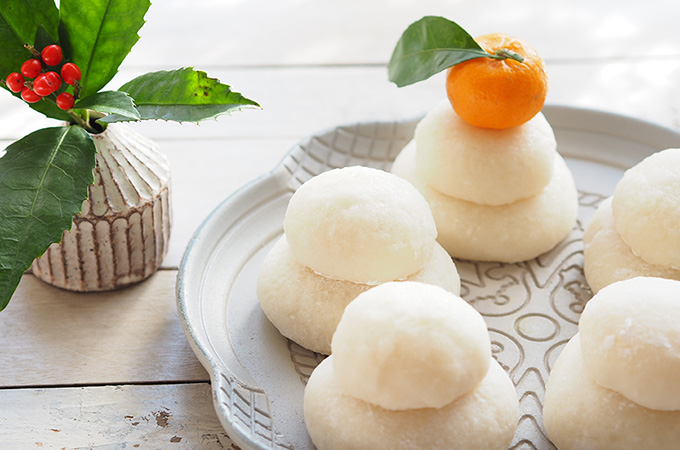
The condition of the skin at this time can be easily imagined by comparing it to mochi (rice cake). Freshly made mochi is very soft, and even if you pull and stretch it with both hands, it won't crack. However, if you leave the mochi as it is for a long time, like a kagami mochi (decorative rice cake), the surface dries out and cracks when pulled.
The same thing happens with skin. When skin loses moisture and remains dry, it becomes more prone to cracking. When the skin is then stretched by bending and straightening the fingers, the elasticity of the skin surface cannot withstand the force, and cracks form. This is why cracks and chapping are more likely to occur on the extensor side of the finger joints (the side opposite to the bending side of the joint, the outer side).
These cracks can occur not only on the hands but also on the feet. They are commonly seen on the heels. Cracks can also form when the skin on the heels hardens like a callus.
In the case of heels, not only is the skin prone to dryness, but the skin also hardens as a defense mechanism to support the body's weight, making it more susceptible to cracking. For example, it's the same principle as calluses that form on the hands of craftsmen; areas constantly exposed to external stimuli thicken the skin to protect the inside. People who are overweight, those who put weight on their heels when walking, and those who walk barefoot on hard floors are especially prone to heel cracks.
The lips are also one of the areas prone to cracking. Because the skin is thin and has difficulty retaining moisture, it is important to prevent dryness with regular care.